
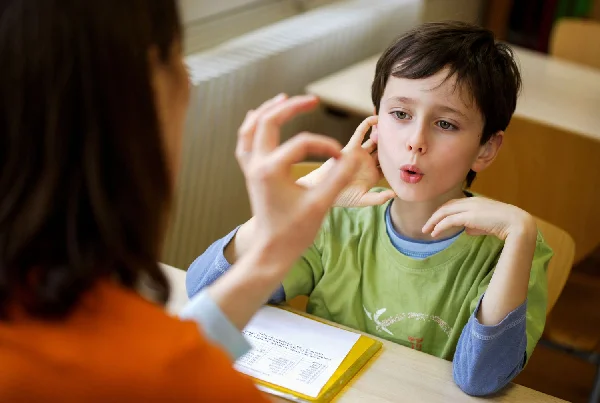
Clear communication is an important part of everyday life, learning, social interaction, and emotional expression. Difficulties with speech, language, voice, fluency, or communication can affect children and adults in different ways. Early identification and appropriate therapy can help individuals develop more effective communication skills.
At Paartha Diagnostic Centre, associated with Dr. Vyom Aggarwal, speech and communication concerns can be evaluated with an individualized approach. Our Speech Therapy Clinic in GTB Nagar aims to support children and adults with communication difficulties through structured assessment and goal-oriented therapy.
Speech therapy is a specialized form of intervention designed to address difficulties related to speech, language, communication, voice, fluency, and certain oral-motor functions. Therapy is planned according to the individual's age, abilities, communication needs, and specific concerns.
Speech therapy may focus on improving:
· Speech sound production
· Pronunciation and articulation
· Understanding language
· Expressing thoughts and ideas
· Vocabulary development
· Sentence formation
· Fluency and stuttering
· Voice-related concerns
· Social communication
· Functional communication skills
The specific goals of therapy depend on the individual's assessment.
Children develop communication skills at different rates, but persistent difficulties may require professional evaluation. Parents may notice concerns related to speech clarity, vocabulary, understanding instructions, or the child's ability to communicate needs.
A speech-language evaluation may be useful when a child:
· Starts speaking later than expected
· Has difficulty forming words
· Is difficult for others to understand
· Uses a limited vocabulary
· Has difficulty forming sentences
· Struggles to follow age-appropriate instructions
· Repeats sounds or words frequently
· Has difficulty communicating needs
· Shows challenges with social communication
Early evaluation can help determine whether the child requires speech therapy or additional developmental assessment.
Some children and adults may have difficulty producing particular sounds clearly. This can affect how easily other people understand their speech.
Therapy may include activities designed to improve sound production, articulation, oral awareness, and overall speech clarity. Exercises are selected according to the individual's specific speech pattern rather than using the same approach for every patient.
Consistent practice between sessions can also be important for developing and maintaining communication skills.
Language involves more than simply speaking. It includes understanding words, following instructions, using vocabulary, forming sentences, asking questions, and communicating ideas.
Children with language difficulties may need support with both receptive and expressive language.
Therapy may work on areas such as:
· Vocabulary
· Sentence construction
· Understanding questions
· Following directions
· Describing objects and events
· Storytelling
· Conversational skills
· Functional communication
The goals are adapted according to the child's developmental level and everyday communication needs.
Stuttering involves interruptions in the normal flow of speech and may include repetitions, prolongations, or blocks. It can occur during childhood and may continue into later years in some individuals.
Speech therapy can focus on communication strategies, fluency-related skills, and reducing the impact of speech difficulties on everyday communication. The approach depends on the individual's age, speech pattern, and personal needs.
Parents should avoid putting unnecessary pressure on children to speak quickly or repeatedly correcting their speech.
Speech and communication difficulties are not limited to childhood. Adults may experience communication changes following neurological conditions, injuries, medical events, or other circumstances.
Depending on the underlying concern, therapy may support speech clarity, language abilities, voice, or functional communication.
Adults experiencing a noticeable or sudden change in speech should seek appropriate medical evaluation, particularly when the change occurs along with other sudden neurological symptoms.
Some children with developmental conditions may experience communication difficulties. These may include challenges with language development, social communication, speech clarity, or functional communication.
Speech therapy can form one part of a broader developmental support plan when appropriate. Collaboration between parents, therapists, educators, doctors, and other professionals can help create consistent goals for the child.
Therapy should be individualized rather than based solely on a diagnostic label.
A proper assessment helps identify the nature and extent of a communication difficulty. The evaluation may consider speech production, language understanding, expressive language, fluency, voice, communication behavior, and functional communication.
For children, parents may also be asked about developmental history, early communication milestones, home language, school performance, and everyday communication.
Based on the assessment, appropriate therapy goals can be established.
Every individual has different communication needs. A child who has difficulty producing certain sounds may require a different therapy approach from a child with delayed language development.
Similarly, adult communication rehabilitation may require a different set of goals.
At Paartha Diagnostic Centre, therapy planning can be tailored according to the individual's assessment, age, communication abilities, and functional requirements. Progress can be monitored over time and therapy goals adjusted when appropriate.
For children, communication development does not happen only during therapy sessions. Parents and caregivers can support progress by incorporating communication activities into everyday routines.
Simple activities such as reading together, naming objects, encouraging conversation, describing daily activities, and giving children adequate time to respond can create additional opportunities for communication.
Parents can also discuss home-based activities with the speech therapist to ensure that practice remains appropriate for the child's needs.
Professional assessment may be considered when communication difficulties persist or interfere with school, work, relationships, or daily activities.
Consider seeking an evaluation if you notice:
· Delayed speech development
· Unclear or difficult-to-understand speech
· Persistent stuttering
· Difficulty understanding language
· Limited vocabulary
· Difficulty expressing thoughts
· Voice changes
· Communication difficulties following a medical condition
· Challenges with social communication
Early professional guidance can help identify appropriate next steps.
For individuals and families searching for a Speech Therapy Clinic in GTB Nagar, Paartha Diagnostic Centre provides a convenient setting for assessment and communication-focused support.
Associated with Dr. Vyom Aggarwal, the centre focuses on understanding individual concerns and providing appropriate healthcare guidance. Speech therapy requirements can vary considerably, making individualized assessment an important first step.
Whether the concern involves speech clarity, language development, fluency, voice, or functional communication, professional evaluation can help determine the appropriate therapeutic approach.
Communication plays an important role in learning, relationships, independence, and participation in everyday life. Speech and language difficulties can affect people at different stages of life, but appropriate assessment and structured intervention can provide meaningful support.
At Paartha Diagnostic Centre, associated with Dr. Vyom Aggarwal, individuals seeking a Speech Therapy Clinic in GTB Nagar can discuss their communication concerns and explore suitable assessment and therapy options based on their individual requirements.
1. What problems can speech therapy help with?
Speech therapy may support concerns involving speech sounds, language development, fluency, voice, communication, and certain oral-motor or functional communication difficulties.
2. When should a child have a speech evaluation?
An evaluation may be useful when a child has persistent difficulty with speech clarity, language understanding, vocabulary, sentence formation, or communication compared with their developmental expectations.
3. Can adults receive speech therapy?
Yes. Adults may benefit from speech and language therapy for various communication difficulties, including problems associated with certain neurological conditions or other medical circumstances.
4. Can speech therapy help with stuttering?
Speech therapy can provide individualized strategies and support for people who stutter. The approach depends on the person's age, fluency pattern, and communication goals.
5. How long does speech therapy take?
The duration varies according to the individual's concerns, therapy goals, progress, consistency, and underlying factors. There is no fixed duration applicable to everyone.
6. Where can I find a Speech Therapy Clinic in GTB Nagar?
Paartha Diagnostic Centre provides access to communication-focused assessment and support for individuals looking for a Speech Therapy Clinic in GTB Nagar


 Call Or Whatsapp Now
Write a Reply or Comment