
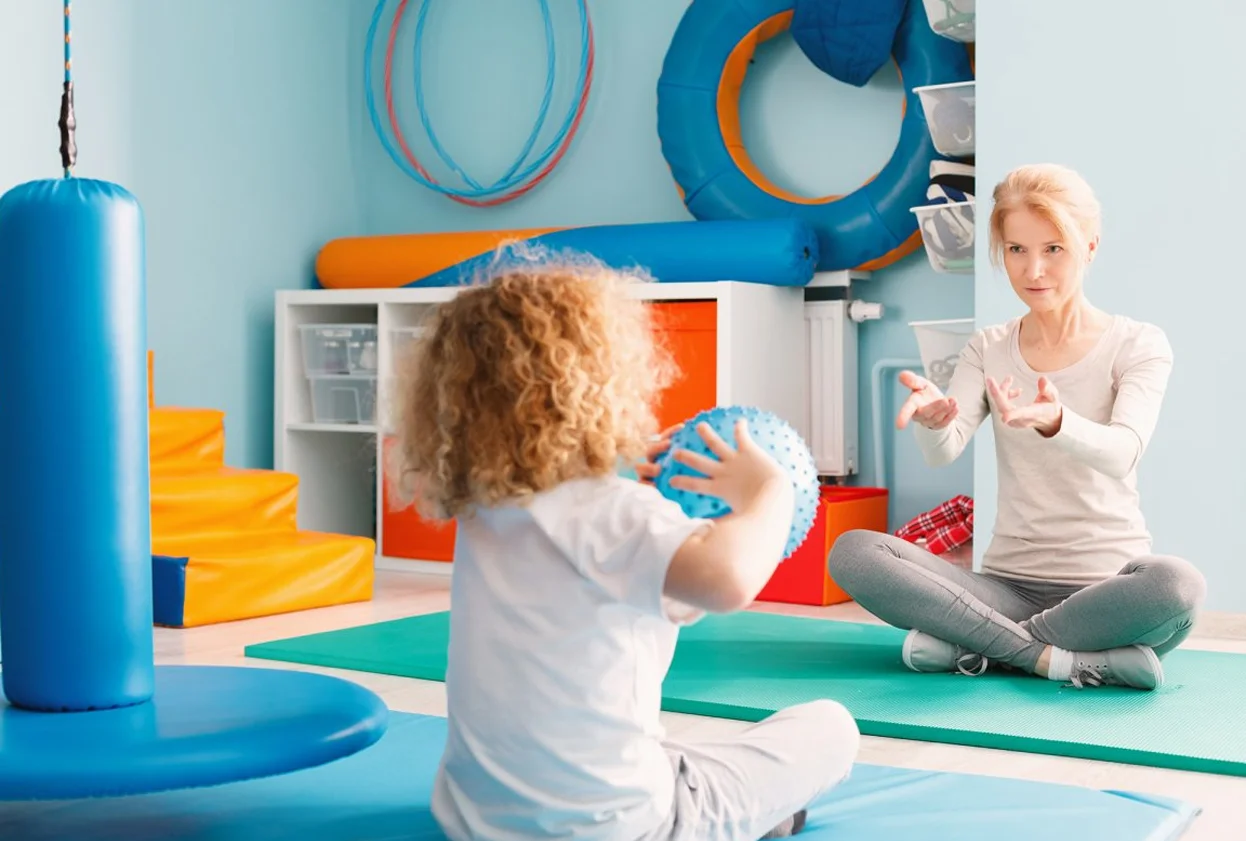
Occupational therapy helps individuals develop, improve, or maintain skills needed for everyday activities, learning, play, work, and independent living. Children and adults may require occupational therapy for different reasons, including developmental challenges, motor difficulties, sensory concerns, or problems performing daily activities.
At Paartha Diagnostic Centre, associated with Dr. Vyom Aggarwal, individuals and families can seek guidance for occupational therapy requirements. Our Occupational Therapy Centre in GTB Nagar focuses on understanding each person's functional abilities and creating appropriate goals based on their specific needs.
Occupational therapy is a healthcare service that focuses on helping people participate more effectively in meaningful everyday activities. These activities may include dressing, eating, writing, playing, studying, working, communicating, and other daily tasks.
Therapy goals are based on the individual's age, abilities, challenges, environment, and functional requirements.
Occupational therapy may address areas such as:
· Fine motor skills
· Gross motor coordination
· Hand-eye coordination
· Sensory processing
· Balance and body awareness
· Handwriting
· Self-care skills
· Daily living activities
· Attention during activities
· Functional independence
Children develop motor, sensory, and functional skills gradually. Some children may require additional support when difficulties affect their ability to play, learn, participate in school, or complete everyday activities.
Parents may consider an occupational therapy assessment when a child has difficulty with:
· Holding or using pencils
· Writing or drawing
· Using scissors
· Buttoning clothes
· Feeding independently
· Dressing
· Participating in age-appropriate play
· Maintaining attention during activities
· Coordinating movements
· Managing certain sensory experiences
Assessment can help identify which skills require support and whether occupational therapy may be appropriate.
Fine motor skills involve the coordinated use of small muscles, particularly in the hands and fingers. These skills are important for writing, drawing, using utensils, handling classroom materials, and performing everyday tasks.
Occupational therapy activities may help children develop hand strength, finger coordination, grasp patterns, precision, and hand-eye coordination.
Activities are selected according to the child's developmental level and functional goals.
Gross motor skills involve larger body movements such as walking, running, climbing, jumping, reaching, and maintaining balance.
Some children may experience difficulties with coordination, posture, balance, or motor planning. Occupational therapy may incorporate structured activities designed to support body awareness, coordination, movement planning, and functional participation.
The specific exercises depend on the individual's abilities and therapeutic goals.
Sensory processing refers to how the nervous system receives and responds to information from the environment and the body.
Some children may appear unusually sensitive to sounds, textures, movement, touch, lights, or other sensory experiences. Others may actively seek particular types of sensory input.
When sensory differences interfere with daily activities, learning, play, or participation, an occupational therapy assessment may help determine appropriate strategies.
Therapy should be individualized rather than based on a single sensory behaviour.
Independent daily activities are an important part of development. Children may need additional support learning tasks such as:
· Eating independently
· Using a spoon or fork
· Brushing teeth
· Washing hands
· Dressing
· Wearing footwear
· Managing personal belongings
· Organizing school materials
Occupational therapy can break complex activities into smaller steps and help individuals practise them in a structured manner.
Writing requires coordination between visual perception, fine motor control, hand strength, posture, attention, and motor planning.
Children who struggle with handwriting may have difficulty with pencil grip, letter formation, spacing, writing speed, or maintaining written work.
Occupational therapy can address underlying functional skills that contribute to handwriting and classroom participation. Strategies may be adapted according to the child's age and school requirements.
Children with developmental differences may experience difficulties involving motor coordination, sensory processing, attention, self-care, or functional independence.
Occupational therapy can form part of a broader developmental support plan when appropriate. Depending on the child's needs, occupational therapists may work alongside pediatricians, psychologists, speech therapists, special educators, physiotherapists, teachers, and parents.
A coordinated approach can help maintain consistent goals across different environments.
Occupational therapy is also relevant for adults who experience difficulty performing everyday activities following illness, injury, neurological conditions, or other functional challenges.
Depending on the individual's condition, therapy may focus on improving independence, adapting activities, strengthening functional abilities, or developing strategies to manage daily tasks.
Adults experiencing new or sudden functional difficulties should receive appropriate medical evaluation to understand the underlying cause.
A comprehensive assessment can help identify the skills affecting everyday participation. The evaluation may consider motor abilities, sensory responses, coordination, posture, attention, self-care, handwriting, and other functional activities.
For children, parents may also provide information about developmental milestones, school performance, play activities, daily routines, and specific concerns at home.
The assessment findings can then be used to develop practical and individualized therapy goals.
There is no single occupational therapy program suitable for everyone. A child struggling with handwriting may require different intervention from a child experiencing sensory or self-care difficulties.
Therapy goals should therefore be based on the individual's functional needs.
At Paartha Diagnostic Centre, the focus is on understanding the person's current abilities and identifying areas where structured support may improve participation and independence.
For children, therapy progress can be supported when parents and caregivers incorporate appropriate activities into daily routines.
Simple opportunities such as encouraging independent dressing, involving children in age-appropriate household tasks, practising fine motor activities, and providing structured play can reinforce functional skills.
Parents should follow strategies recommended by the therapist and avoid introducing exercises that may not be appropriate for the child's specific needs.
An occupational therapy assessment may be considered when functional difficulties persist or interfere with daily activities, school participation, or independence.
Common signs may include:
· Difficulty holding a pencil
· Poor handwriting
· Trouble with dressing or feeding
· Difficulty using classroom tools
· Poor coordination
· Sensory-related difficulties
· Problems with motor planning
· Difficulty completing age-appropriate tasks
· Reduced independence in daily activities
Professional assessment can help determine whether occupational therapy is appropriate.
Families searching for an Occupational Therapy Centre in GTB Nagar can approach Paartha Diagnostic Centre for guidance regarding developmental, motor, sensory, and functional concerns.
Associated with Dr. Vyom Aggarwal, the centre aims to provide a patient-focused approach based on individual requirements. Therapy goals can be developed according to the person's age, abilities, daily activities, and areas requiring support.
The ultimate purpose of occupational therapy is to improve meaningful participation in everyday life. For children, this may involve better participation in school, play, self-care, and family activities. For adults, goals may focus on independence at home, work, or other daily environments.
Progress may occur gradually, and therapy plans can be adjusted as new skills develop.
Occupational therapy can provide valuable support for individuals experiencing difficulties with motor skills, sensory processing, handwriting, self-care, coordination, or everyday activities. Individualized assessment and structured intervention can help develop practical skills and greater independence.
At Paartha Diagnostic Centre, associated with Dr. Vyom Aggarwal, families looking for an Occupational Therapy Centre in GTB Nagar can discuss their concerns and understand suitable assessment and therapy options based on individual needs.
1. What does occupational therapy help with?
Occupational therapy can support fine motor skills, gross motor coordination, sensory processing, handwriting, self-care, daily activities, and functional independence.
2. Can children benefit from occupational therapy?
Yes. Children may benefit when difficulties with motor skills, sensory processing, handwriting, self-care, coordination, or everyday participation affect their development or learning.
3. Can occupational therapy help with handwriting?
Yes. Therapy may address functional skills involved in handwriting, including fine motor control, hand strength, coordination, visual-motor skills, and posture.
4. What are signs that a child may need occupational therapy?
Difficulty with dressing, feeding, pencil use, handwriting, coordination, sensory experiences, or age-appropriate daily activities may indicate that an occupational therapy assessment could be useful.
5. Is occupational therapy only for children?
No. Adults may also receive occupational therapy for functional difficulties related to illness, injury, neurological conditions, or other challenges affecting daily activities.
6. Where can I find an Occupational Therapy Centre in GTB Nagar?
Paartha Diagnostic Centre provides support and guidance for individuals seeking an Occupational Therapy Centre in GTB Nagar, with therapy needs considered on an individual basis


 Call Or Whatsapp Now
Write a Reply or Comment